 (844) 660-2990
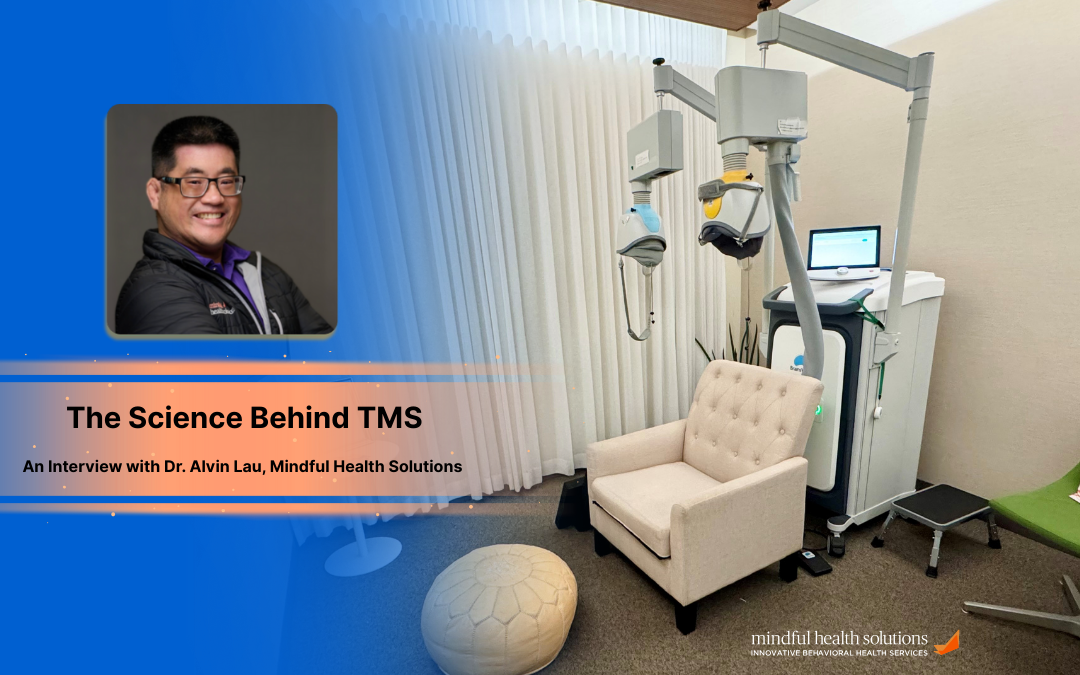
An Interview with Dr. Alvin Lau, Psychiatrist & Associate Chief for Training & Innovation at Mindful Health Solutions
For many people, Transcranial Magnetic Stimulation (TMS) is a turning point in their journey toward greater mental wellness, bringing clearer thinking, more hopeful days, and a reconnection with life. But how does TMS work, and what’s happening in the brain that leads to these changes?
To answer the most common questions about TMS therapy, we sat down with Dr. Alvin Lau, Psychiatrist and Associate Chief for Training & Innovation at Mindful Health Solutions, to take a closer look at the science behind TMS as it helps people overcome mental health disorders.
First, what is TMS?
Transcranial Magnetic Stimulation is a non-invasive neuromodulation treatment used for treatment-resistant depression, but may also help with symptoms of anxiety, OCD, PTSD, migraines, and more. It uses magnetic fields to deliver energy, which modulates areas of the brain that participate in the control of mood and thought so you can feel more like yourself – no surgery, anesthesia, or medication changes required.
What exactly does “magnetic stimulation” mean?
Magnetic stimulation in this case refers to the usage of changing magnetic fields to induce electric current in our brain circuitry. Brain circuits reference the network of neurons that work together to process and transmit information, and those circuits are often malfunctioning in cases of mental health disorders. By stimulating these areas, TMS helps to restore function, thereby improving symptoms of depression and other struggles.
We hear stories of how the brain can heal itself. How does TMS support the brain’s healing when it comes to mental health and depressed brains?
Brain healing with regards to TMS is generally related to the concept of neuroplasticity – the phenomena where the brain, in response to various stimuli, undergoes changes on different levels that lead to the reorganization of neural pathways and formation of new neural connections. TMS can assist and encourage this process by activating the neural circuitry via energy from magnetic stimulation, which leads to correction and restoration of normal brain functioning.
When you “rewire” your brain with TMS, are there any potential dangers or things to be aware of before considering treatment?
One of the huge advantages of TMS treatment is the general absence of long-term adverse side effects. The stimulation delivered is from a source external to your body, and the depth of effect is relatively shallow, so there are minimal systemic side effects as well. The treatment is considered very safe if administered appropriately, such as by the trained and qualified team at a Mindful Health Solutions clinic.
It’s important to note there are some short-term side effects patients may experience during treatment that typically resolve quickly after the end of the session, such as application-site discomfort and/or headaches. The process can also take some time to get results, since brain circuitry responds at different speeds to TMS, and some people may not notice response until later in the process.
In the spirit of re-wiring the brain, doing things during the session that promote a healthier outlook can be useful, like engaging in mindfulness or visualization techniques.
Are there any activities that could reverse the effects of TMS, or prevent the full effect from taking place?
When going through TMS treatments for depression or other mental health disorders, we want the brain to be as free of neurochemical interference as much as possible. Thus, we generally advise people to avoid any type of active substance use during treatment, as it may affect the way the brain reacts to stimulation. There are also certain medications that may inhibit or interfere with the process of TMS, so we advise patients to discuss any medications with their doctor prior to starting treatment. Also, active acute stressors can reinforce mental health symptoms and could work against the effects of TMS.
What are the steps Mindful Health Solutions providers take to ensure that TMS is safe, and patients experience the full benefits?
Our providers do a thorough intake and evaluation to ensure we know you as a person and really understand what symptoms you’re suffering from, as this can determine what type of TMS we will suggest.
We also have a robust internal training and continuing education program not only for our providers but our technicians as well. This program helps ensure consistency and safety, and that we remain on the cutting edge of available information regarding TMS.
How can individuals struggling with their mental health schedule TMS?
Treatment begins with an initial consultation with a clinician to discuss your symptoms and needs, then determine how TMS can be most beneficial for you. After the treatment call, you will be contacted by our administrative team to go over logistical information like scheduling, treatment times and length, and insurance. During your first treatment appointment, we will make determinations with regards to targeting and the amount of energy needed to stimulate your neurons, and you will undergo your first TMS treatment that day.
To get started, call us at (844) 660-2990 or visit our website to fill out our contact form.