 (844) 660-2990
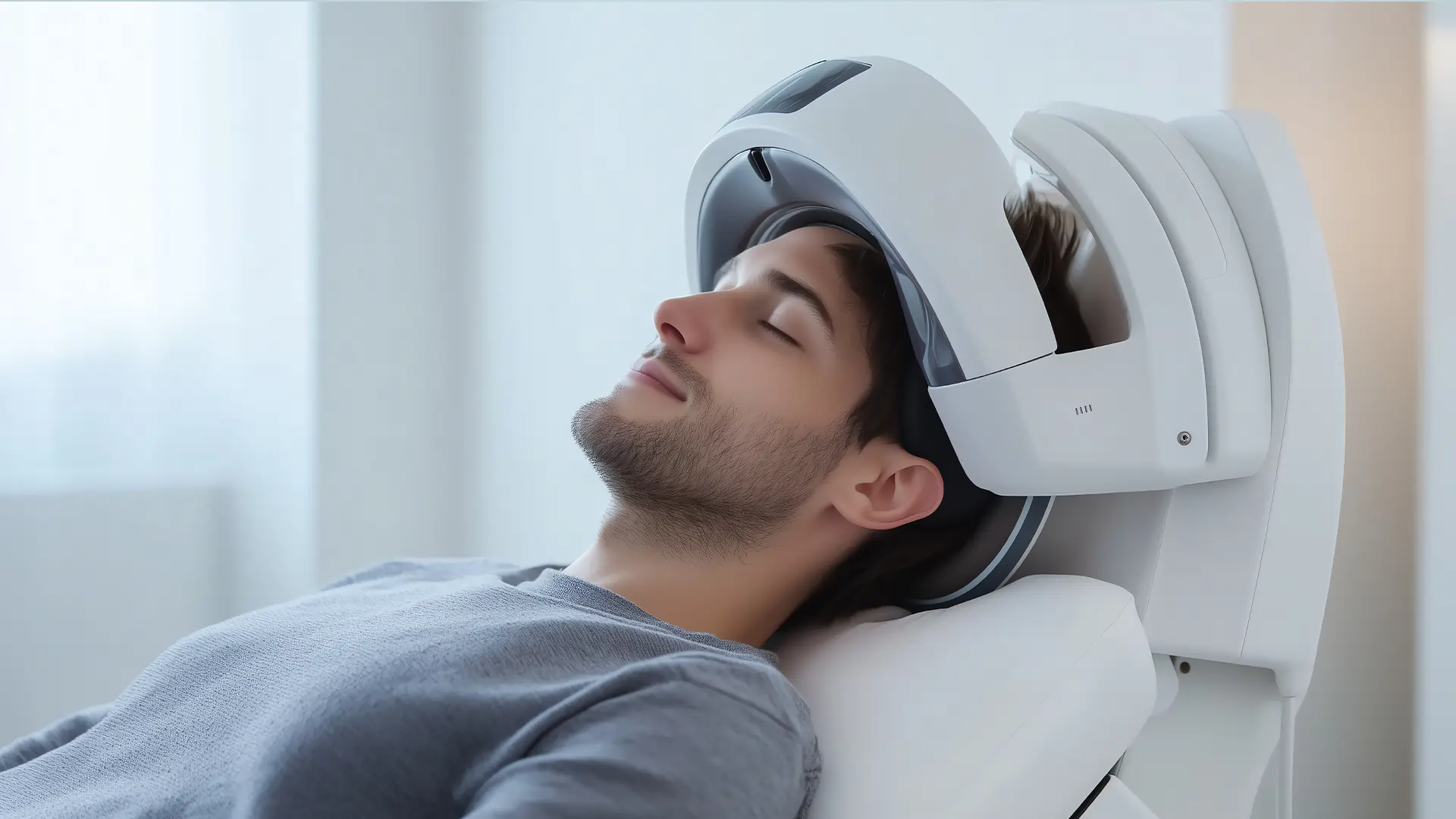
If you’ve been living with depression and haven’t found relief through medication, you’re not alone, and you’re not out of options. Transcranial magnetic stimulation (TMS) is an FDA-approved, non-invasive treatment for depression that’s helped hundreds of thousands of people find real relief. Like any treatment, it’s important to understand the intricacies of this approach before deciding it could be right for you. . Here’s an honest look at the pros and cons of TMS therapy for depression.
What Is TMS?
TMS, transcranial magnetic stimulation, uses gentle targeted magnetic pulses to stimulate the area of the brain responsible for mood regulation. The FDA approved it in 2008 as a non-medication treatment for major depressive disorder (MDD), particularly for people who haven’t found success with antidepressants.
During a session, a magnetic coil is placed against your head and delivers precise pulses to the prefrontal cortex. These pulses activate neurons that release mood-regulating neurotransmitters like serotonin and dopamine without affecting the rest of your body. This is a gentle approach. Patients describe TMS to feel like a light tapping sensation against the head.
Who Is a Good Candidate for TMS Therapy?
TMS may be right for you if you’ve tried one or more antidepressants without adequate relief, or if you’re looking for a non-medication approach to treating depression or anxiety. It’s not recommended for people with certain metal implants near the head or a history of seizures. A consultation with a clinician is the best way to determine if you’re a candidate.
The Pros of TMS Treatment for Depression
It Works for Many People
Clinical data shows that nearly 2 in 3 patients, about 65%, experience meaningful improvement with TMS. And for nearly 1 in 3 patients, TMS doesn’t just improve symptoms: it puts depression into full remission. (Sackeim et al., 2020)
No Downtime
Sessions last 15–20 minutes and require no anesthesia or sedation. Most patients drive themselves to and from appointments and return to normal activity immediately after. We always ensure treatment works with your schedule, even offering a one-day option, MindfulONE™.
Effective for Treatment-Resistant Depression
TMS is specifically indicated for people who haven’t responded to antidepressant medication, making it one of the most valuable advanced mental health treatments available for hard-to-treat depression.
Minimal Side Effects
Unlike antidepressants, TMS has no systemic effects. It won’t cause weight gain, sexual dysfunction, cognitive fog, or GI disruption. The most commonly reported side effects are mild scalp discomfort or a temporary headache during the first few sessions, both of which typically resolve quickly.
Drug-Free
TMS is an option for people who prefer to avoid medication, can’t tolerate antidepressants, or are looking for a treatment that works differently than anything they’ve tried before. Note: TMS can be administered in addition to most patients’ current medications. Consult your clinicians to confirm.
Treatment Is Tailored to Your Needs
With TMS, care technicians map your brain so the brain magnet is placed for your head specifically, and that the pulses are targeting the area of your brain you need.
The Cons of TMS for Depression
With every service, there are factors that could impact your ability to receive treatment. While many patients find that the benefits of TMS outweigh the drawbacks, here are some considerations to take into account.
It Requires a Time Commitment
Standard TMS is typically five days a week for six to eight weeks. Sessions themselves are short, but fitting daily appointments into a work schedule can be challenging. Accelerated TMS programs are available for those who need a faster timeline. Mindful Health Solutions is pleased to offer a one-day program known as MindfulONE™.
Insurance Coverage Varies
Most major insurance plans cover TMS for depression, but coverage depends on your provider and diagnosis. It’s worth verifying benefits before starting treatment.
Some Patients Experience Relapse
TMS is effective, but it’s not a permanent fix for everyone. Some patients see symptoms return after completing a course of treatment. When that happens, maintenance TMS sessions (less frequent, ongoing sessions) can help sustain results. Prior responders tend to do well with repeat treatment. Learn more about maintenance treatments.
TMS vs. Antidepressants — How Do They Compare?
| TMS Therapy | Antidepressants | |
| How It Works | Magnetic pulses stimulate underactive brain regions linked to mood regulation | Chemical adjustment of neurotransmitters (serotonin, dopamine, norepinephrine) |
| FDA Approval | FDA-approved for major depressive disorder (MDD) & treatment-resistant depression | FDA-approved for MDD, anxiety, and other mood disorders |
| Invasiveness | Non-invasive – no surgery or sedation | Oral medication |
| Time Until Results | Most patients see improvement within 2–4 weeks of treatment | Typically 4–8 weeks before full therapeutic effect |
| Treatment Duration | 6–8 weeks (Standard) 1–3 weeks (Accelerated TMS)1 day (MindfulONE™) | Ongoing — often months to years |
| Common Side Effects | Mild scalp discomfort and temporary headache | Weight gain, sexual dysfunction, fatigue, nausea, emotional blunting |
| Systemic Side Effects | None — no effect on other organs or systems | Yes — affects the entire body, including GI, cardiovascular, and hormonal systems |
| Cognitive Effects | No cognitive impairment reported | Brain fog, memory issues, and concentration difficulties reported by some patients |
| Best For | Treatment-resistant depression, patients seeking drug-free options | First-line treatment, mild to moderate depression, patients preferring non-procedural care |
| Not Ideal For | Patients with metal implants, pacemakers, a history of seizures, or current substance abuse disorders | Patients sensitive to medications or those who’ve tried multiple medications without relief |
| Downtime | None — return to normal activity immediately after each session | None — but adjustment period as body acclimates |
| Can It Be Combined? | Yes — often used alongside therapy and/or medication | Yes — often paired with psychotherapy |
| Available at Mindful Health Solutions? | Yes — 21 locations throughout Washington, California, and Texas | Yes — through medication management services |
Comparison to Other Treatment Options
There are several other treatment options for depression symptoms, including traditional antidepressant medications, psychotherapy, esketamine, and ketamine infusion therapy.
Compared to antidepressants, TMS has very few side effects while also offering highly effective results. Medications help many people struggling with depression, but they don’t work for everyone. Having an option like TMS is incredibly valuable in helping many patients finally find relief.
Esketamine (brand name SPRAVATO®) is a drug that is derived from the anesthetic ketamine that has a long history of being used to treat depression. Esketamine is a more potent form of ketamine and is fairly new to the market as it became FDA approved in March 2019. SPRAVATO® is an FDA-approved nasal spray form of esketamine administered in a certified healthcare setting. It is the first FDA-approved medication specifically designed for treatment-resistant depression.
Ketamine infusion therapy has similar success rates and effects to esketamine, and can help with the treatment of depression. However, ketamine infusion therapy is not covered by most insurance providers and can have a high out-of-pocket cost.
See If TMS Therapy Is Right for You — Find a Mindful Health Solutions Clinic Near You
At Mindful Health Solutions, we’ve delivered over 365,000 TMS treatments and have been providing this kind of care since 2011, giving our clinical teams some of the most extensive real-world TMS experience in the country. We operate 21 mental health clinics across three states, with same-day and rapid TMS treatment options available.
If you’re ready to explore whether TMS is right for you, we’re here to help. Book a consultation today.