 (844) 660-2990

For many patients seeking mental health care, standard depression treatments may not provide adequate relief. Maybe medications helped somewhat, but not enough. Or maybe treatment started to feel like a cycle of adjustments without clear progress. That’s where Transcranial Magnetic Stimulation, or TMS, can help.
TMS is not just another treatment option; it offers a different, more effective approach. With TMS, patients don’t have to try another round of medication and hope; because, this treatment can be applied in tandem with medications that are already working to optimize relief. TMS treatment is personalized to each patients’ needs, symptoms and treatment history.
There are several TMS protocols available, including standard, accelerated, and one-day approaches for different treatment timelines and goals. Finding the TMS protocol that is right for your needs can be the key that unlocks healing.
What is TMS for Mental Health Treatment?
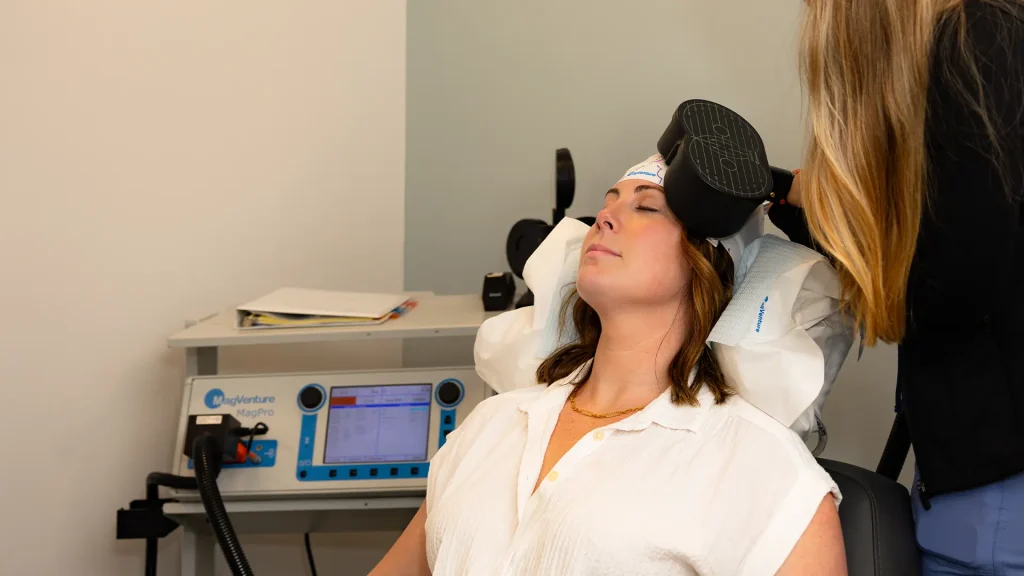
TMS is a non-invasive depression treatment that uses gentle magnetic pulses to stimulate specific areas of the brain associated with mood and emotional regulation.
Unlike antidepressant medications, TMS doesn’t circulate through the bloodstream or affect the entire body. This means there is no risk of unwanted systemic side effects with TMS. Treatment is delivered directly to brain pathways during in-office sessions using a magnetic coil placed against the scalp. While this is a gentle approach, TMS may yield mild scalp discomfort on application sites or a slight headache during or after sessions. However, since no anesthesia is required, patients remain awake during treatment and can likely return to their normal daily routines afterward.
TMS treatment for depression is FDA-approved and is often recommended for people who haven’t found enough relief through antidepressants or who are looking for an alternative approach to care.
What Conditions Can TMS Treat?
While TMS is most often used for depression, it may also help with other mental health conditions.
You may consider TMS for:
- Treatment-resistant depression
- Major depressive disorder (MDD)
- Anxiety disorders
- Obsessive-compulsive disorder (OCD)
- Post-traumatic stress disorder (PTSD)
- Other mood disorders that have not responded to medication
Before treatment, patients meet with a certified psychiatrist or nurse practitioner to receive an individualized evaluation. This evaluation determines whether TMS may be appropriate for their symptoms and treatment history.
Standard TMS: What to Expect
Standard TMS is the most common treatment approach and typically involves one 15-20 minute session per day over several weeks.
During treatment, patients sit and relax while magnetic pulses are applied to targeted areas of the brain. Some people describe the feeling as a light tapping sensation on the scalp. While mild discomfort is possible early on, many patients find that sessions become more comfortable with time.
Symptom improvement often occurs gradually over a treatment cycle, which is why a clinician’s ongoing communication and progress monitoring is a vital element of care.
Accelerated TMS For Depression— Faster Results for Faster Relief
Accelerated TMS follows the same core principles as standard TMS but delivers multiple sessions per day over a shorter timeline. For patients who need effective care in less time, Accelerated TMS protocols provide a realistic and effective option for treatment.
Accelerated TMS may be a good fit for you if you:
- Prefer a shorter treatment timeline
- Travel long distances for care
- Have demanding personal or professional schedules
- Haven’t responded to previous depression treatments
- Are interested in same-day depression treatment options
Because treatment is delivered on a more concentrated schedule, careful evaluation and psychiatrist oversight continue throughout the process.
How Does a Clinician Choose the Right TMS Protocol?
There is no one-size-fits-all approach to TMS for mental health treatment.
The right protocol for a patient depends on several factors, including their symptoms, prior treatment history, lifestyle, scheduling needs, and treatment goals. Some patients may benefit from a traditional schedule, while others may be better candidates for accelerated TMS or other advanced protocols.
The goal is to find an approach that addresses the condition being treated and suits the person receiving care.
Could TMS Be Right for You?
Many people considering TMS for treatment-resistant depression have already tried different medications and are looking for relief that actually lasts. If that sounds familiar, TMS may be worth considering.
TMS may be a good approach for you if:
- Antidepressants haven’t provided meaningful improvement
- Medication side effects are getting in the way of progress
- Symptoms affect your daily life
- You’re interested in evidence-based alternatives to medication-first care
A thorough evaluation with a Mindful Health Solutions clinician will help determine whether TMS fits into your broader mental health treatment plan and which protocol makes the most sense for where you are right now.
Find the Right TMS Protocol with a Mindful Health Solutions Specialist
Understanding the differences between TMS protocols is a meaningful first step, and you don’t have to figure it all out on your own.
At Mindful Health Solutions, board-certified psychiatrists provide personalized interventional psychiatry care tailored to each patient’s needs, history, and goals. We offer evidence-based treatment options in a supportive, patient-centered environment.
To learn whether standard, accelerated, or one-day TMS may be right for you, book an appointment with a Mindful Health Solutions specialist.
If you are in need of emergency mental health assistance, please call or text 988, the Suicide and Crisis Lifeline, or 911 for immediate help.